The artwork looks balanced on screen, but the sample puckers at the front. When choosing embroidery backing for an unstructured cap, keep the fabric, logo size and placement fixed. Change one variable per trial.
This comparison shows which change smooths the fabric, sharpens the logo edges and keeps the inside comfortable to wear.
How do backing and framing affect the front of the cap?
Embroidery backing supports the fabric during stitching. Fabric stability, logo size, stitch density and care requirements all influence the choice of backing. Madeira’s embroidery backing guide.
A cap frame holds the cap in place during stitching. On an unstructured cap, check how the frame holds the curved fabric and how the backing supports it from the inside. Madeira’s cap framing guide.
| Component | Purpose | What to check on the sample |
|---|---|---|
| Tear-away backing | Supports the embroidery. Tear away the excess after stitching. | Check the logo edges and fabric flatness after removing excess backing. |
| Cut-away backing | Supports the embroidery. Trim the excess and leave the backing beneath the stitches in place. | Turn the cap over and check the backing edge, stiffness and comfort when worn. |
| Front-panel stiffener | Helps the front hold its shape when the design includes a stiffener. | Record the cap construction separately so the technician can identify what changed between samples. |
| Cap frame | Holds the cap front and backing in place during stitching. | Compare logo placement and puckering after removing the caps from the frame. |
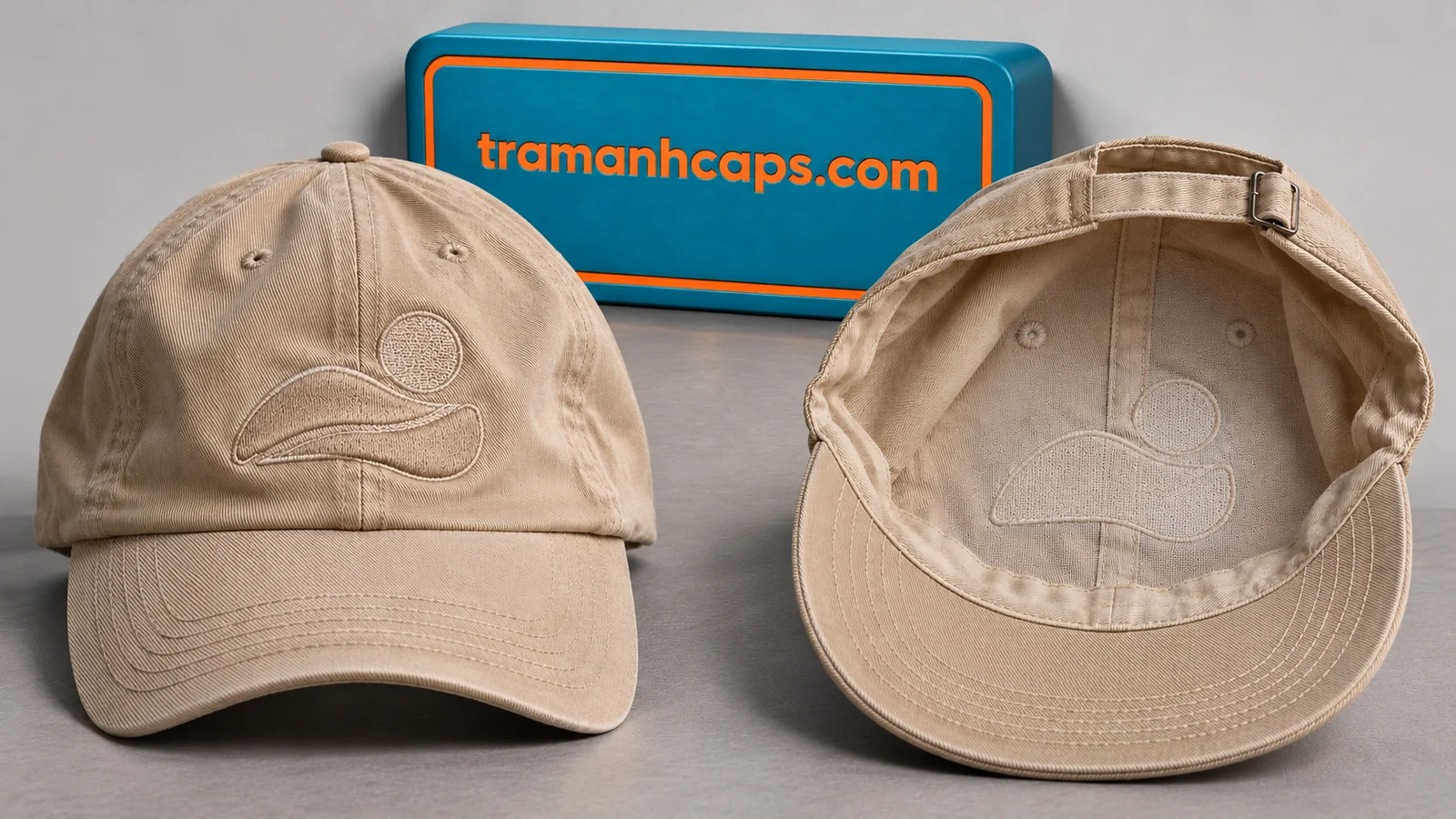
Compare two samples to identify the cause of puckering
Keep the original sample and record what changed
Photograph the original sample as it sits when worn. Mark fabric pulling at logo corners, seams or near the visor. Record the fabric code, logo size and embroidery file version.
When testing a different backing, keep the cap construction, embroidery file and framing method the same where possible. Record any other changes so the reviewer can interpret the results.
Inspect both sides after removing the frame
Position both samples the same way under the same light. Compare puckering, lettering and alignment at the seam. Then check the inside and try each cap on to see if the backing edge rubs the forehead.
From the TACS production team
A sample can look smoother on the outside while the backing rubs on the inside. Record both findings so the technician can see what to adjust before remaking the sample.
If the fabric still pulls, ask the technician to review the embroidery file, stitch density, sequence and placement. Save any resized or simplified artwork as a new version for approval.
Send a cap order inquiry to Trâm Anh Caps
Send the logo file, placement, size and photos of both sides of the sample. Include cap style, quantity, delivery date and destination. Mark areas of fabric pulling, backing edges that rub and open decisions.
Minimum order of 300 pieces. Once you have these details, send your inquiry through the contact page.
Hotline/Zalo: 0916 381 830 (Mr. Đạo) or 0397 886 639 (Ms. Thủy).
Email: [email protected].
66 TTH29 Street, Tân Thới Hiệp Ward, District 12, Ho Chi Minh City.
NOTE: We only accept orders with a minimum quantity of 300 pieces [MOQ 300 pcs].