A few years ago, “eco-friendly caps” was still a fringe concept in most Vietnamese B2B procurement. By 2026, it has become a specific line item in purchase orders – particularly from FDI companies and consumer brands building a sustainability narrative. This article explains the actual material options, what the certifications mean, and when the additional cost is worth it.
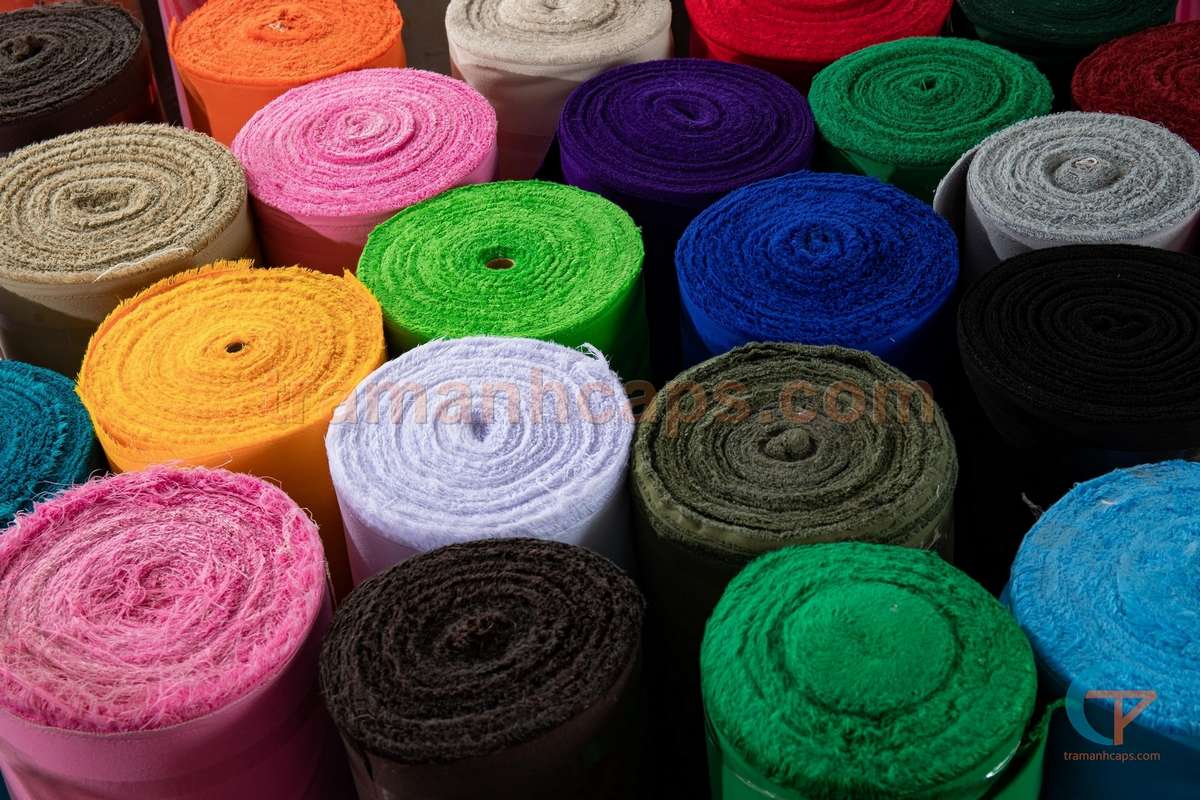
This trend is not driven by marketing – it comes from real supply chain pressure. An increasing number of multinational corporations require their tier-1 and tier-2 suppliers to demonstrate material traceability and environmental impact. The uniform cap, however small, is one link in that chain.
The main eco-friendly fabric options for caps
There are currently three primary material categories described as “eco-friendly” in cap production. Each has different properties and suits different use cases.
1. Recycled polyester from plastic bottles (rPET)
This is the most common option in current B2B orders. rPET fiber is produced by grinding used PET plastic bottles into pellets, then extruding them into textile yarn. Roughly 5–6 standard 500ml bottles yield enough fabric for one cap.
Practical advantages: Breathable, lightweight, good colorfastness, holds shape through repeated washing. In appearance and wearing feel, rPET is indistinguishable from conventional polyester. Common certification: GRS (Global Recycled Standard).
Limitations: Still a synthetic fiber – not biodegradable. The sustainability story here is about diverting existing plastic waste, not about natural materials.
2. Organic cotton
Organic cotton is grown without pesticides, synthetic fertilizers, or genetic modification. GOTS (Global Organic Textile Standard) is the most widely recognized certification.
Advantages: Soft feel, skin-friendly, naturally biodegradable. Well-suited to brands communicating health and environmental responsibility together.
Limitations: 20–35% more expensive than conventional cotton. Color range is broad but some specialty tones may be limited depending on the organic dyeing process.
3. Bamboo fabric
Less common in large-volume uniform cap orders, but appearing in some premium order specifications. Bamboo fiber has natural antimicrobial properties, is extremely soft, and absorbs moisture well. Best suited for bucket hats or soft caps intended for hot and humid conditions.
Important note: Not all bamboo fabric is genuinely eco-friendly – the process of converting bamboo fiber into usable textile can involve significant chemicals if not properly controlled. Request OEKO-TEX Standard 100 certification when specifying this material.
Certifications – what actually matters
This is the area where most corporate buyers have questions and misunderstandings in equal measure. A factory saying “eco fabric” is not sufficient – you need to understand which certification corresponds to your specific requirement.
| Certification | Applies to | Practical meaning |
|---|---|---|
| GOTS | Organic fibers (cotton, wool…) | The entire production chain from fiber to finished product meets organic standards |
| GRS | Recycled materials (rPET, recycled fiber) | Confirms recycled content percentage in the product – typically requires minimum 20% |
| OEKO-TEX 100 | All fabric types | No harmful chemicals detected – important for any product in direct skin contact |
| BLUESIGN | Production process | The entire manufacturing line meets standards for wastewater, energy use, and chemical safety |
💡 When working with a factory: Not every factory holds certifications for every fabric type – but a reliable factory will know which fabric suppliers carry the relevant certifications and can provide supporting documentation when requested. A direct question – “What certifications does this fabric carry, and can you provide the paperwork?” – is entirely reasonable.
What actually changes in production
From a sewing and embroidery standpoint, eco-friendly fabrics do not require significant process changes. The same machines, techniques, and QC steps apply. The real differences are:
- Fabric sourcing: Must select from certified suppliers – standard fabric warehouses do not carry eco-certified stock
- Embroidery thread: If the full product must be eco-certified, the embroidery thread must also meet the corresponding standard
- Documentation: FDI buyers commonly request original certification files from the fabric supplier – factory confirmation alone is not sufficient
- Lead time: If certified fabric must be sourced from a specific supplier, lead time may extend by 5–10 days compared to standard orders
When is the extra cost worth it?
Not every order needs eco-certified fabric. Here is a straightforward framework:
✅ Use eco materials when:
- Your company has an ESG policy or publishes an annual sustainability report
- The product will be featured in media coverage or brand documentation
- Your partners or clients require responsible supply chain sourcing
- Your brand is positioning at a premium level and wants every physical touchpoint to reflect those values
⚖️ Worth considering when:
- Budget is limited but you want a small sustainability story – choose rPET, which has a lower premium than organic cotton
- Internal communication about sustainability is the goal, not third-party certification
- Small order quantity – under 200 pieces – where the cost premium per unit is more manageable